General Research Interests
Research Pillar ①: Compressive Sensing Theory and Applications
The project team has extensive research achievements in the theory and application of compressive sensing, resulting in 5 high-level papers published in top-tier academic conferences and journals such as IOTJ, JSEN, ISPA, and MSN.
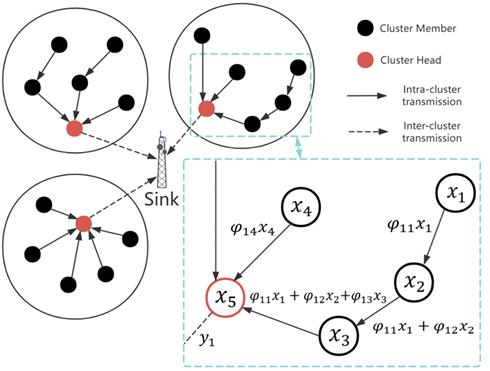
An energy-saving routing algorithm for WSNs that combines compressive sensing principles with ant colony optimization. This novel algorithm reconceptualizes data aggregation in clustered networks through compressive sensing, transforming the paradigm of traditional intra-cluster communication.
ISPA 2024
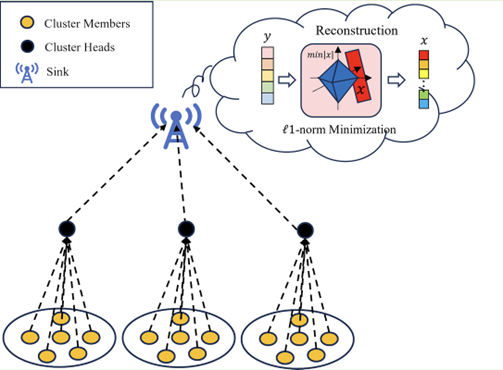
A Dictionary-Enhanced Clustered Compressive Sensing Routing (DEC2R) protocol designed to conserve energy and provide network load balancing, significantly extending network lifetime and improving energy efficiency.
JESN 2024
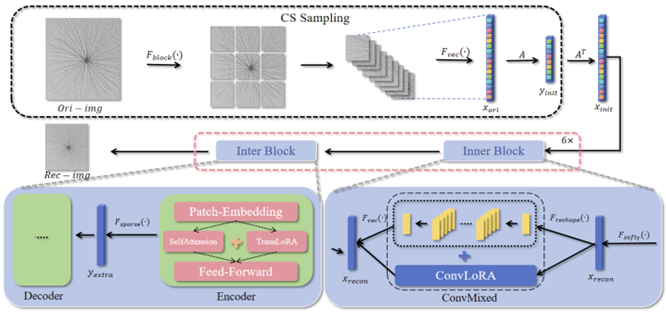
A ConvMixed-ViT architecture based on Low-Rank Adaptation (LoRA), which employs an end-to-end approach integrating learnable CS to facilitate adaptive compression and precise reconstruction in edge environments.
IOTJ 2025
A communication-efficient FL method, termed Universal Vector Quantized Compressive Sensing, which combines universal vector quantization CS with FL to enable dimensionality reduction and quantization of local model updates without considering the distribution of the reduced data.
IOTJ 2024
Research Pillar ②: Heterogeneous Federated Learning and Deep Learning
The team has made significant research contributions in heterogeneous federated learning and deep learning, producing 3 high-level papers published at top-tier academic conferences such as IOTJ, ICC, and MSN.
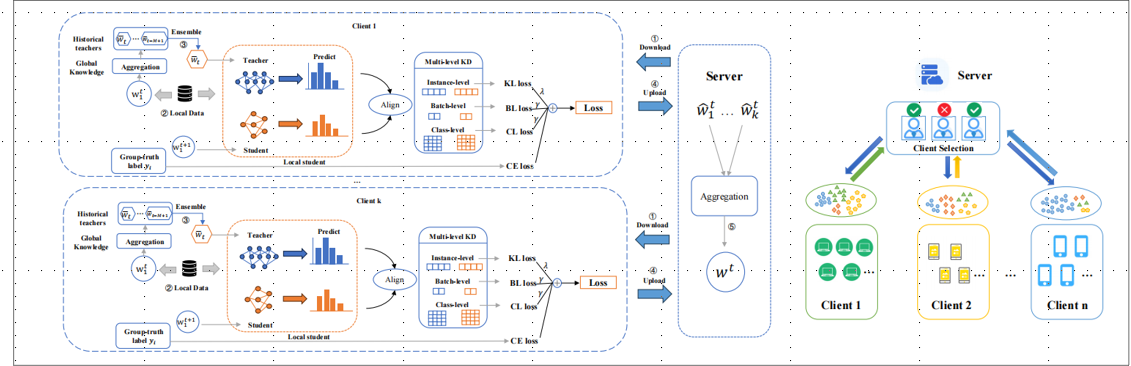
To address data heterogeneity and device instability in edge intelligence, a personalized federated learning framework, pFedMLKD, was proposed. It integrates multi-level knowledge distillation and leverages historical global models to enhance local training, improving learning efficiency and model generalization in heterogeneous data scenarios.
IOTJ 2025
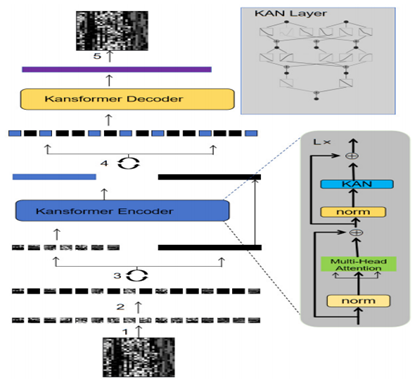
In the field of malicious traffic classification, a model named MTC-Kansformer was developed to tackle the quadratic computational complexity in downstream backbone networks. It integrates a Kansformer encoder, improving both classification accuracy and efficiency.
ICC 2024
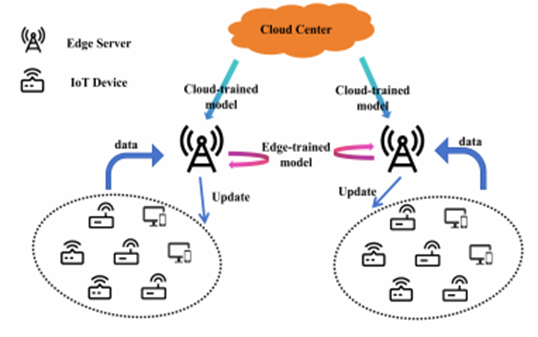
Due to computational and communication constraints, heterogeneous edge devices have unequal opportunities to participate in global aggregation. A multi-client selection mechanism for federated learning was designed, modeling participation as a game-theoretic process to maximize client benefits within a finite number of iterations.
MSN 2024
Research Pillar ③: Multimodal Understanding and Intelligent Recognition
The project team has achieved substantial results in intelligent recognition, multimodal signal processing, and wearable device pattern recognition, leading to 5 high-level publications at premier academic conferences such as TNNLS, IS, and IMWUT/UbiComp.
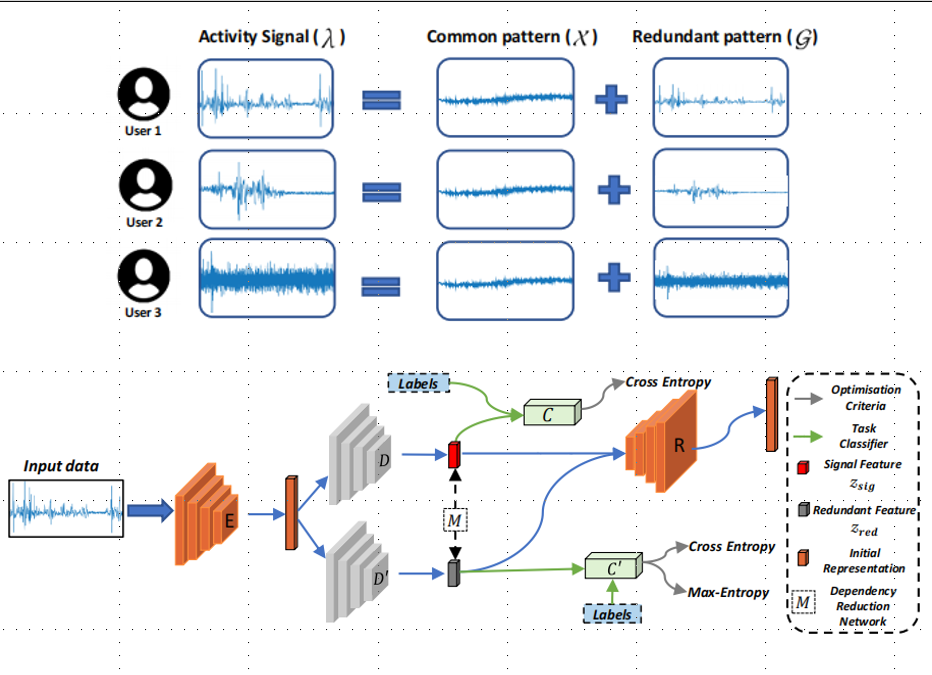
Learning to Recognize Human Unbinding Behavior Patterns
ACM 2022
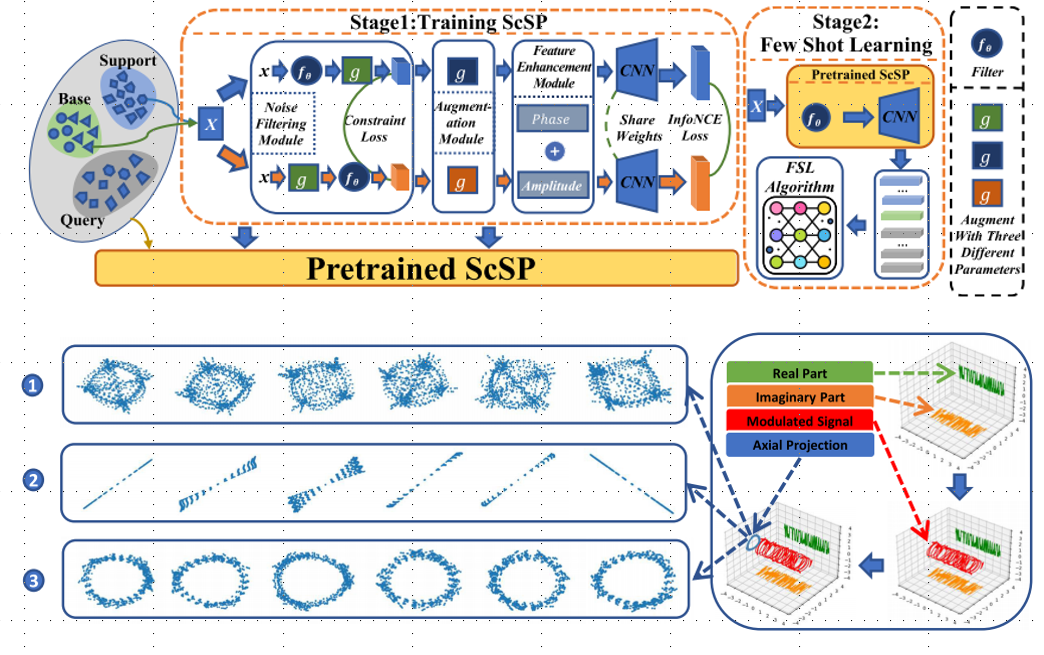
Semantic-Consistent Few-Shot Sample Modulation and Recognition
TNNLS 2025